

Growing Up in the Age of AI: What Skills Will Children Actually Need?
Artificial intelligence can provide answers, generate ideas, and solve problems within seconds, but what does that mean for how we prepare children for the future? This week’s blog explores the skills children will need in the age of AI and how the adults in their lives can help develop them.
If you are raising, teaching, coaching, evaluating, or otherwise supporting children today, you are helping prepare them for a future that none of us can fully predict. Artificial intelligence is already changing how we find information, communicate, solve problems, create content, and complete everyday tasks. By the time today's children enter adulthood, many of the tools they use for work and learning may look very different from the ones we are introducing them to now.
That raises an important question for all of us. If technology can increasingly provide answers, generate ideas, summarize information, solve problems, and complete tasks within seconds, what do children actually need to learn?
For generations, education has placed tremendous value on knowing the answer. Children learn information, practice skills, demonstrate what they know, and gradually develop the knowledge needed to solve increasingly complex problems. That foundation still matters. What is changing is the environment in which children will use that knowledge. Access to information is no longer the primary challenge. Increasingly, the challenge is knowing what to do with it.
This is where our role as adults becomes especially important. Whether you are helping a child with homework at the kitchen table, designing a classroom lesson, providing therapy, coaching a team, or simply answering a child's questions, you are helping shape how that child approaches information and solves problems. The goal cannot simply be teaching children how to use AI. We also have to teach them when to use it, when to question it, and when they need to do the thinking themselves.
Emerging research on artificial intelligence and education is beginning to reinforce this distinction. AI can provide explanations, generate examples, support brainstorming, offer feedback, and make information more accessible. For children who benefit from individualized explanations or additional practice, those capabilities can be incredibly useful. At the same time, completing a task and learning from a task are not necessarily the same thing.
Imagine a student who uses AI to produce a well-written essay. The final product may look impressive, but what did the student actually practice? Did they organize their thoughts, retrieve relevant information, determine which ideas were important, develop an argument, revise unclear sentences, or recognize weaknesses in their reasoning? If technology performed most of those steps, the assignment may have been completed successfully while many of the skills the assignment was designed to develop received very little practice.
That distinction matters because some of the struggle we naturally want to remove from children's lives is actually part of how learning occurs. Trying an approach that does not work, becoming frustrated, reconsidering the problem, making a mistake, asking for help, and eventually finding a solution all require cognitive and emotional skills. These experiences help develop persistence, problem-solving, executive functioning, emotional regulation, and metacognition. When we remove every difficult step in the name of efficiency, we may also remove opportunities for growth.
This does not mean we should resist AI. Children are growing up with this technology, and learning to use it effectively will likely become an important skill in its own right. Our responsibility is to help them understand the difference between using technology as a tool and allowing it to become a substitute for thinking.
That distinction can begin with something as simple as the questions we ask. When a child presents an answer, we can ask how they reached it. When AI provides an explanation, we can ask whether it makes sense. When information appears convincing, we can ask how we know it is accurate. When a child uses technology to solve a problem, we can ask whether they could explain the solution to someone else. These conversations move children beyond simply obtaining information and toward evaluating and understanding it.
Critical thinking may become one of the most important skills we can nurture. AI can produce information quickly and confidently, but confident information is not always accurate information. Children will increasingly need to distinguish evidence from opinion, identify inconsistencies, compare sources, recognize bias, and know when additional information is needed. To do that effectively, they still need foundational knowledge of their own. It is difficult to recognize that something is wrong when you do not know enough about the subject to question it.
This is one reason traditional academic skills remain important. Reading, writing, mathematics, science, history, and general knowledge do not suddenly become irrelevant because technology can provide answers. These skills give children the mental framework necessary to understand, evaluate, and apply the information they encounter. Knowing things still matters because knowledge gives us something against which new information can be tested.
Children will also need strong metacognitive skills, or the ability to think about their own thinking. They need opportunities to recognize when they understand something and when they do not, determine which strategies work for them, monitor their progress, and change approaches when something is not working. An AI system can provide an answer, but the child still needs enough self-awareness and judgment to decide whether that answer is useful.
Creativity and curiosity may become even more valuable for similar reasons. If nearly everyone has access to tools capable of generating information and ideas, simply producing something may become less distinctive. Asking an interesting question, making an unexpected connection, imagining a different solution, or developing an original perspective becomes increasingly important. Children need opportunities to explore, experiment, build, discuss, create, and occasionally figure things out without immediately being given an answer.
The same is true for distinctly human skills. Communication, empathy, collaboration, emotional regulation, perspective-taking, leadership, and navigating disagreement develop through relationships and real experiences with other people. The child learning how to resolve a disagreement with a classmate, contribute to a team, accept constructive feedback, advocate for themselves, or manage frustration is developing abilities that will remain valuable regardless of how sophisticated technology becomes.
For those of us supporting children, this may require reconsidering what successful learning looks like. The fastest answer is not always the best learning experience. The most polished assignment does not always represent the deepest understanding. Helping a child immediately is not always more beneficial than allowing them enough time to wrestle with a problem first.
There will certainly be times when AI makes learning more accessible and effective. A child might ask it to explain a difficult concept another way, generate additional practice problems, provide feedback on something they have already written, or help them explore a topic that sparked their curiosity. In those situations, technology is extending the child's thinking rather than replacing it.
The challenge for us is learning to recognize the difference.
We are preparing children for a world in which the tools will continue changing. Teaching them only how to operate today's technology will therefore never be enough. What we can give them is something far more durable: the ability to think critically, ask meaningful questions, regulate themselves, communicate effectively, adapt when circumstances change, learn independently, and recognize when they need help.
Perhaps that is the opportunity hidden within all of the uncertainty surrounding AI. It forces us to reconsider what education and development are ultimately supposed to accomplish. Our job has never simply been to raise children who know the right answers. It is to help develop people who know how to think, learn, create, connect with others, make sound decisions, and continue growing when the answers are not obvious.
AI will continue to evolve. The children in our homes, classrooms, clinics, teams, and communities will grow alongside it. The question for us is not whether we can prepare them for every technological change that is coming. We cannot. The better question is whether we can help them develop the skills that will allow them to adapt, think, and thrive no matter what comes next.

Raising Children Who Believe They Can: The Power of Goal Setting and Self-Efficacy
Goal setting is about more than accomplishing tasks. It helps children develop self-efficacy, resilience, executive functioning, and the confidence to face future challenges. Learn how parents can foster these lifelong skills through meaningful, achievable goals.
As parents, it is natural to celebrate big milestones. We cheer when children learn to ride a bike, earn good grades, make a sports team, or accomplish something they have worked hard to achieve. While these moments are certainly meaningful, one of the greatest gifts we can give children is not the achievement itself. It is helping them develop the belief that they are capable of overcoming challenges, learning new skills, and reaching goals through persistence and effort.
Psychologist Albert Bandura referred to this belief as self-efficacy. Simply put, self-efficacy is a person's confidence in their ability to successfully complete a task or overcome a challenge. It is not about believing you will always succeed. Rather, it is the confidence that you can continue learning, adapting, and persevering even when success is not immediate.
This distinction is important because confidence and self-efficacy are not the same thing. Confidence can fluctuate based on circumstances or recent successes. Self-efficacy is built through experience. It develops when children repeatedly encounter challenges, apply strategies, learn from setbacks, and eventually experience progress. Each successful experience becomes evidence that they can handle future challenges as well.
One of the most effective ways parents can nurture self-efficacy is by teaching children how to set meaningful goals. Goals provide direction, create opportunities for problem-solving, and allow children to experience the connection between consistent effort and meaningful progress. Without goals, children may begin expecting immediate success or become discouraged when improvement takes time. With thoughtfully chosen goals, they learn that growth is often the result of many small steps rather than one dramatic breakthrough.
The most effective goals are those that are challenging enough to require effort but realistic enough to remain attainable. A child who struggles with reading is unlikely to become a fluent reader overnight, but setting a goal to read for fifteen minutes each evening or finish one chapter book over the course of a month provides a target that is both achievable and meaningful. As children reach these smaller milestones, they begin accumulating experiences that strengthen their belief in their own abilities.
Parents play an important role throughout this process. It can be tempting to step in when children become frustrated or to solve problems before they have the opportunity to work through them independently. While this often comes from a place of love, consistently removing obstacles may unintentionally reduce opportunities for children to develop confidence in their own problem-solving abilities. Support remains essential, but there is tremendous value in allowing children to wrestle with age-appropriate challenges while knowing that encouragement and guidance are available when needed.
It is equally important to recognize that setbacks are not interruptions in the learning process. They are part of it. Children who learn to view mistakes as information rather than evidence of failure are more likely to persist when tasks become difficult. Research has consistently shown that children who develop higher levels of self-efficacy demonstrate greater motivation, stronger persistence, improved academic performance, and greater resilience when facing challenges. They are more likely to embrace difficult tasks because they believe their actions can influence the outcome.
Parents can reinforce this mindset by shifting conversations away from outcomes alone. Instead of focusing exclusively on grades, scores, or wins, discussions can explore the strategies children used, the obstacles they encountered, and what they learned along the way. These conversations teach children that success is not simply something that happens to them. It is something they actively influence through preparation, reflection, and perseverance.
Goal setting also provides valuable opportunities for children to develop executive functioning skills. Planning, organizing, monitoring progress, adjusting strategies, and delaying gratification are all cognitive processes that support goal-directed behavior. These skills are essential not only for success in school, but also for managing responsibilities, making thoughtful decisions, and navigating adulthood. Every meaningful goal becomes an opportunity to strengthen the mental skills that support lifelong learning and independence.
Perhaps most importantly, teaching children to set and pursue meaningful goals helps shape how they see themselves. A child who learns that effort, persistence, and thoughtful strategies lead to progress begins to approach new challenges with curiosity rather than fear. Instead of asking, Can I do this? they begin asking, How can I do this? That subtle shift in thinking often becomes one of the most powerful predictors of future success.
As parents, we cannot remove every obstacle our children will encounter, nor should we. What we can do is provide opportunities for them to experience the satisfaction of working toward something meaningful, overcoming setbacks, and recognizing their own growth along the way. Those experiences become the foundation of self-efficacy, resilience, and a lifelong belief that challenges are not barriers to success but opportunities to continue learning.
Helping children achieve goals is about far more than checking a box or celebrating a milestone. It is about helping them develop the confidence to believe that whatever challenge comes next, they have the ability to face it.
For more insights like this, follow along as we continue exploring child development, learning, and practical ways families can support children both in and out of the classroom.
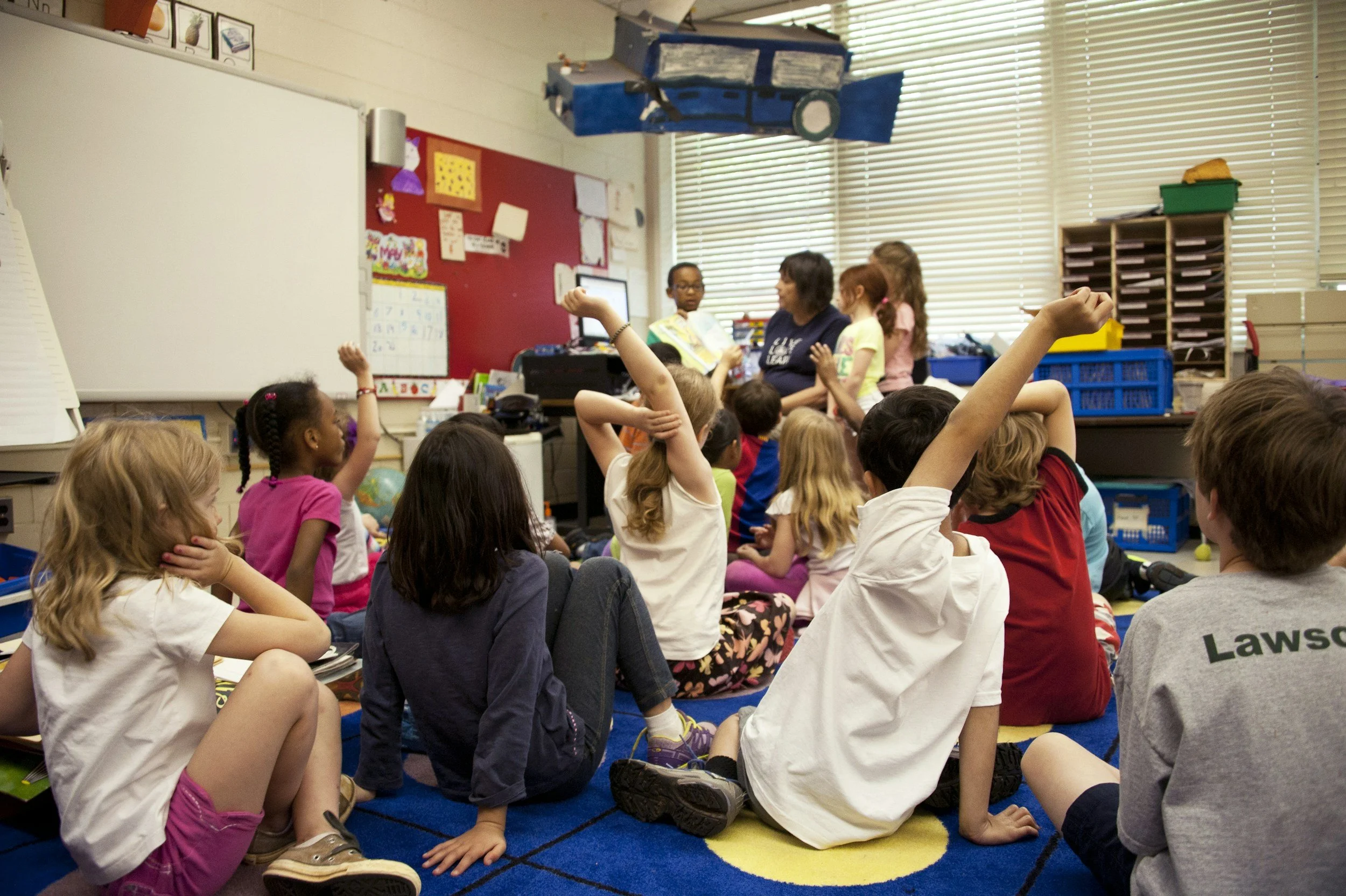
The Transition Back to School Starts Before the First Day
A successful school year begins long before the first day of class. Learn evidence-based strategies to help your child transition back to school with greater confidence, stronger routines, and reduced stress.
For many families, the start of a new school year begins with shopping for supplies, finding backpacks, and checking class schedules. While those preparations certainly matter, one of the most important aspects of a successful school year often begins long before a child walks through the school doors. The transition back to school is not simply a change in location. It is a shift in routines, expectations, relationships, and demands that can have a meaningful impact on a child's academic, emotional, and behavioral adjustment.
Research in developmental psychology consistently shows that children thrive when they experience predictability and routine. During the summer, many schedules naturally become more flexible. Bedtimes are pushed later, mornings become less structured, and daily routines often revolve around vacations, camps, or family activities. While this flexibility can be refreshing, abruptly returning to the structure of the school year can be challenging for many children.
One of the most effective ways parents can ease this transition is by gradually reintroducing school routines before the first day. Research has shown that adequate sleep plays an important role in attention, memory, emotional regulation, and learning. Rather than shifting bedtime the night before school begins, adjusting sleep schedules by fifteen to thirty minutes every few days allows children's bodies to adapt more naturally.
The transition also provides an opportunity to rebuild routines that support independence. Simple responsibilities such as packing a backpack, choosing clothes the night before, organizing school materials, or preparing part of their lunch help children practice executive functioning skills like planning, organization, and responsibility. While these tasks may seem small, repeated opportunities to develop independence often reduce stress for both children and parents once the school year begins.
For some children, however, the biggest challenge is not organization. It is uncertainty.
Returning to school often brings questions that children may not openly express. Will my teacher like me? Will my friends still be in my class? What if the work is harder? What if I make mistakes? These concerns are common, even among children who are excited about returning to school. Research suggests that helping children identify and talk about their emotions can reduce anxiety and improve emotional regulation. Sometimes the most supportive response is simply creating space for children to share their thoughts without immediately trying to solve every problem.
Parents can also help by focusing conversations on growth rather than performance. Instead of emphasizing grades or achievement before the school year even begins, discussions about learning, curiosity, effort, kindness, and problem-solving establish expectations that encourage resilience. Children benefit from knowing that mistakes are an expected part of learning rather than something to fear.
For children with existing learning, attention, behavioral, or emotional challenges, preparation often involves additional planning. Reviewing accommodations, ensuring communication with the school is established, and discussing strategies that were successful the previous year can help create a smoother transition. Beginning these conversations before concerns arise often leads to stronger collaboration throughout the school year.
The weeks leading up to school also provide valuable opportunities for parents to observe their children. Without the structure of the classroom, some children continue reading, organizing themselves, and managing responsibilities with relative ease. Others continue to struggle with attention, following directions, reading, writing, or completing age-appropriate tasks despite encouragement and support. Sometimes these patterns become even more noticeable during the summer because parents have greater opportunities to observe them firsthand.
When concerns persist across settings and over time, they may warrant a closer look. Rather than waiting until the first report card or parent-teacher conference, beginning the school year with a clearer understanding of how a child learns can help families and educators provide support from the very beginning. Comprehensive psychoeducational evaluations help identify cognitive strengths, academic skills, executive functioning, attention, and other factors that influence learning, allowing interventions to be based on understanding rather than trial and error.
Perhaps the most important reminder is that a successful school year is not determined by the first day alone. It is shaped by the routines, relationships, expectations, and preparation that begin well before children ever step into the classroom. Small adjustments made during the final weeks of summer can have lasting effects on confidence, independence, and readiness to learn.
As another school year approaches, remember that preparing children is about much more than buying supplies. It is about helping them feel organized, supported, confident, and ready for the opportunities ahead.
For more insights like this, follow along as we continue exploring child development, learning, and practical ways families can support children both in and out of the classroom.

Your Child's Brain Is Built to Change: Understanding Neuroplasticity
Neuroplasticity is the brain's remarkable ability to change throughout life. Discover how learning, relationships, and early intervention help shape children's developing brains and why understanding this process can change how we think about growth and learning.
One of the greatest misconceptions about learning is the belief that children are simply born with certain abilities and that those abilities remain relatively fixed over time. When a child struggles with reading, organization, attention, or mathematics year after year, it can begin to feel as though those challenges are permanent. Parents may wonder whether their child will ever catch up, and children themselves may begin to believe they simply are not good at school.
Fortunately, decades of neuroscience research tell a much different story.
One of the most significant discoveries in modern neuroscience is the concept of neuroplasticity, the brain's remarkable ability to change, adapt, and reorganize itself throughout life. Every time a child learns a new skill, practices a strategy, solves a problem, or experiences something meaningful, networks of neurons communicate with one another. Repeated experiences strengthen these neural connections, making the brain more efficient at performing those skills in the future. Rather than being fixed, the developing brain is continually shaped by learning, experience, relationships, and the environment.
While neuroplasticity exists throughout the lifespan, childhood represents one of the most dynamic periods of brain development. During these years, the brain is especially responsive to new experiences, making them an important time for acquiring academic skills, developing emotional regulation, strengthening executive functioning, and building healthy habits that support lifelong learning.
This does not mean that every challenge disappears with enough practice, nor does it suggest that children simply need to work harder. Learning differences, ADHD, developmental disorders, and other conditions are real and deserve thoughtful, evidence-based support. What neuroplasticity does tell us is that the brain has an extraordinary capacity to improve when children receive the right instruction, interventions, and opportunities to practice meaningful skills over time.
Research has consistently demonstrated that evidence-based instruction and targeted intervention can produce measurable improvements in learning and even changes in how the brain processes information. Children with reading difficulties, for example, have shown changes in brain activation following structured literacy interventions. Similar findings have been reported in areas such as language development, attention, executive functioning, and mathematics. These discoveries have fundamentally changed how educators and psychologists think about learning and intervention.
Relationships also play an important role in brain development. Supportive interactions with parents, teachers, and other trusted adults help create environments where children feel emotionally safe enough to learn. Research suggests that chronic stress can interfere with attention, memory, and learning by affecting the brain's stress response systems. Conversely, consistent encouragement, emotional support, and positive relationships help children regulate emotions and engage more effectively in learning experiences.
One of the most encouraging aspects of neuroplasticity is that meaningful growth is often gradual. Parents sometimes hope for dramatic improvements, but the brain typically changes through repeated experiences over time. A child who independently reads one more page than they could last month, remembers to organize their backpack more consistently, or approaches challenging work with greater confidence is demonstrating meaningful progress. These small improvements often reflect important changes occurring beneath the surface as new neural pathways become stronger and more efficient.
At the same time, neuroplasticity is not a reason to delay support. While the brain remains capable of learning throughout life, early identification allows children to receive interventions during one of the most responsive periods of development. Understanding why a child is struggling allows families and educators to provide targeted supports rather than relying on trial and error.
This is one reason comprehensive psychoeducational evaluations can be so valuable. By identifying a child's cognitive strengths, learning profile, academic skills, attention, executive functioning, and social-emotional functioning, an evaluation provides a clearer understanding of how that child learns best. Rather than focusing solely on areas of difficulty, the goal is to identify strengths that can be leveraged while developing interventions that address specific areas of need. When instruction is aligned with a child's learning profile, the brain is given greater opportunities to build the connections that support growth.
Perhaps the most hopeful message neuroplasticity offers is that children should never be defined by where they are today. Development is an ongoing process, and the brain is continually adapting to the experiences it encounters. With evidence-based instruction, supportive relationships, meaningful practice, and appropriate intervention when needed, children can continue developing skills that once seemed out of reach.
Understanding neuroplasticity reminds us that growth is rarely about changing who a child is. It is about creating the conditions that allow them to become the most capable version of themselves.