

The Power of Expectations and the Messages Children Internalize
Children constantly internalize the expectations around them. Over time, those messages can shape confidence, motivation, resilience, and how they view their own potential.
Children are constantly learning from the expectations placed around them, even when those expectations are never directly stated. The way adults respond to mistakes, effort, behavior, academic performance, and potential all communicate something to a child about who they are and what is believed to be possible for them. Over time, these repeated experiences can begin to shape not only performance, but also confidence, motivation, and identity.
Research in education and psychology has long demonstrated the influence expectations can have on student outcomes. One of the most widely discussed examples is the Pygmalion Effect, a concept based on research showing that students often perform in ways that align with the expectations communicated by significant adults. When adults consistently express belief, encouragement, and confidence in a child’s ability to grow and improve, children are often more likely to remain engaged, persist through challenges, and view themselves as capable learners.
At the same time, expectations are not communicated only through encouragement. Children are highly perceptive to frustration, lowered standards, comparison, doubt, or repeated assumptions about their abilities. These messages are often communicated in subtle ways through tone, reactions, opportunities provided, levels of patience, or how quickly adults step in when challenges arise. Over time, children begin to internalize these experiences and form beliefs about themselves as learners.
This becomes especially important when children are struggling academically, behaviorally, or emotionally. Healthy expectations do not mean ignoring challenges or pretending difficulties do not exist. Rather, they involve maintaining the belief that growth is possible while also providing the support, structure, and understanding necessary to help a child succeed.
Research related to self-efficacy and motivation continues to show that children who believe improvement is possible are often more likely to tolerate frustration, persist through difficulty, and remain engaged in the learning process. In many ways, expectations help shape whether children begin to interpret setbacks as evidence of inability or as part of growth and development.
Children are constantly gathering information about themselves from the environments around them. The patience adults show during mistakes, the standards communicated, the opportunities encouraged, and the belief expressed during difficult moments all contribute to the messages children absorb over time about their own potential.
Many children may not remember every lesson they were taught, but they often remember how the adults around them made them feel about what they were capable of becoming.
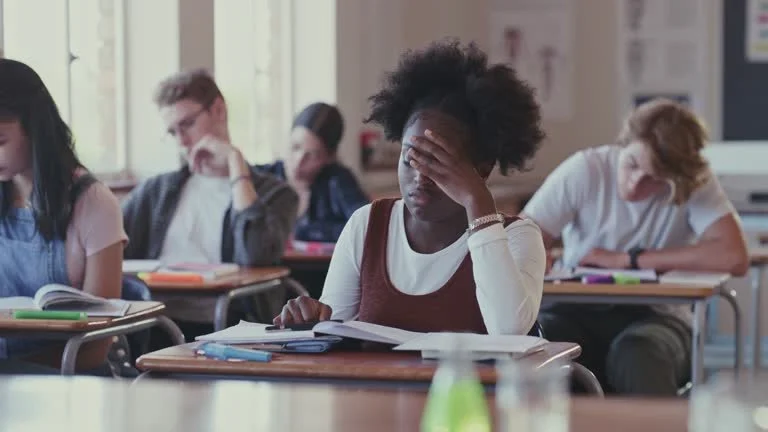
When a Child Finally Understands How They Learn, Everything Can Change
When children understand how they learn, everything changes. Here’s how a psychoeducational evaluation can uncover strengths and unlock progress.
There is a moment that happens for some children that is hard to put into words, but powerful when you see it. It is the moment they realize, “I’m not the problem. I just learn differently.”
For many students, especially those who have been struggling, school can quietly shape how they see themselves. Repeated difficulty with reading, writing, attention, or keeping up with peers can lead to frustration, avoidance, or even shutting down. Over time, those experiences often turn into internal beliefs. “I’m not smart.” “I’m just bad at this.” “School isn’t for me.”
What is often missing is clarity. Not just about what a child is struggling with, but why.
Research in educational psychology has consistently shown that students who develop accurate self-awareness about their learning profiles tend to demonstrate greater motivation, persistence, and academic engagement. This is closely tied to the concept of self-efficacy, which refers to a student’s belief in their ability to succeed in specific tasks. When students understand their strengths and challenges, their confidence becomes grounded in reality rather than shaped by repeated failure.
There is also growing research around metacognition, or the ability to think about one’s own thinking. Students who are taught to understand how they learn are better able to plan, monitor, and adjust their approach to tasks. This has been linked to improved academic outcomes across multiple domains, particularly in reading comprehension and problem-solving.
The challenge is that many students are expected to develop this awareness on their own, without ever being given a clear explanation of how their brain works.
This is where a focused psychoeducational evaluation can be transformative.
A high-quality evaluation does more than produce scores or determine eligibility. When done well, it creates a detailed picture of how a child processes information, where they excel, and where they may need support. It connects patterns across cognitive functioning, academic skills, attention, and behavior in a way that makes sense to both parents and the child.
More importantly, it gives language to experiences that previously felt confusing. Instead of “I can’t focus,” a child begins to understand how attention works and what supports help. Instead of “I’m bad at reading,” they begin to see the specific skill breakdown and what can be done to improve it. Instead of avoiding work, they begin to approach it with strategies that actually fit how they learn. This shift matters.
Research on strengths-based approaches in education suggests that when students are taught to leverage their strengths while addressing their areas of need, they are more likely to stay engaged and less likely to internalize failure. It changes the narrative from limitation to strategy.
Parents often notice the difference quickly. A child who once resisted school may begin to show more willingness. A child who felt overwhelmed may begin to take small risks again. Not because the work suddenly became easy, but because it finally made sense.
Clarity leads to better support, both at home and in school. It allows for more targeted interventions, more effective accommodations, and more productive conversations with educators. It also helps ensure that expectations are aligned with the child’s actual learning profile, not assumptions.
If you are trying to understand how your child learns, or why certain challenges persist despite effort, taking a deeper look may be the next step.
You can learn more about the evaluation process by clicking here:
When a child understands themselves, it changes how they approach learning. And in many cases, that is where real progress begins.
Want more insights like this? Subscribe for weekly content designed to help you better understand how children learn and how to support them effectively.