
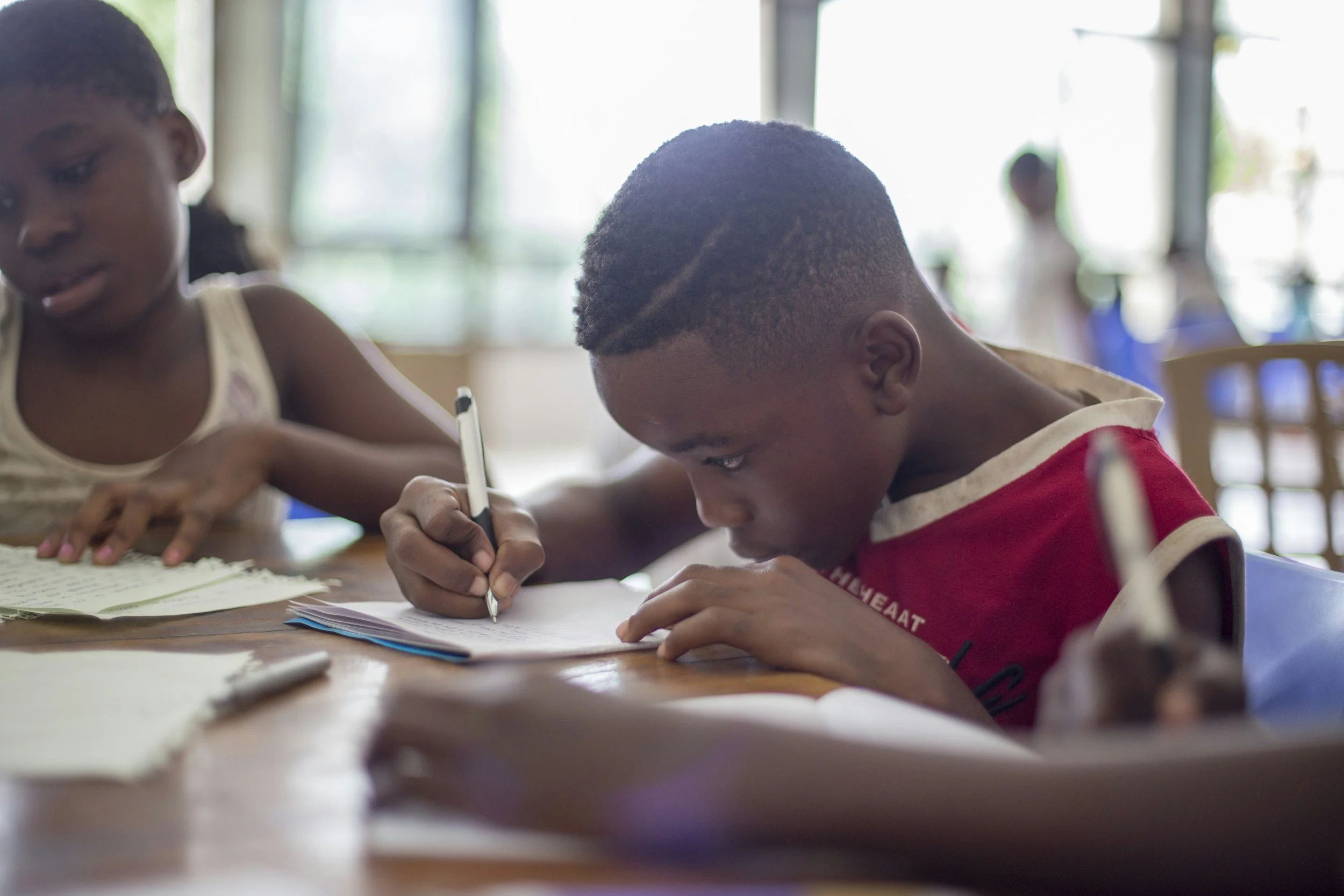
Writing by Hand vs. Typing: A School Psychologist's Perspective on Child Development
Technology has transformed how children write, but faster is not always better during development. From early literacy to organizing complex ideas, writing by hand engages skills that develop across childhood and adolescence. A school psychologist explores why pen and paper still deserve a place alongside keyboards, assistive technology, and AI.
As a school psychologist, I spend a lot of time evaluating children and adolescents who struggle with written expression. That work has changed the way I think about writing in general. Putting an idea on paper seems simple because most of us do it without thinking about everything happening behind the scenes. For a developing child, however, writing requires many different skills to work together at the same time.
Think about what happens when a child is asked to write a paragraph. They first have to understand what is being asked, come up with an idea, decide what they want to say, find the words to express it, and organize those thoughts in a way that makes sense. At the same time, they have to remember spelling, construct sentences, use punctuation, physically write the words, keep track of what they have already written, and hold onto what they want to say next. When those processes work together efficiently, we simply see the finished paragraph. When one or more of them is difficult, writing can quickly become frustrating.
I see this often during psychoeducational evaluations. A student may explain an idea beautifully in conversation but struggle to communicate the same idea on paper. Another student may have excellent handwriting and spelling but have difficulty organizing their thoughts. Some children know exactly what they want to say, but so much of their attention goes toward spelling, punctuation, or forming letters that they lose track of the original idea. For others, attention, working memory, language, processing speed, or executive functioning can make the process more difficult. The final piece of writing may look similar in each of these situations, but what is happening underneath can be very different.
Seeing those differences has reinforced something that applies to all children, not only those who struggle with writing. Written expression develops over time and is built from many smaller skills. That is particularly important to remember as technology continues to change how children learn and communicate.
Technology has unquestionably made writing easier and more accessible in many ways. Children can type assignments, dictate into devices, use spellcheck and predictive text, move entire paragraphs around in seconds, and increasingly use artificial intelligence to help brainstorm, organize, and edit their work. These tools can be incredibly useful. For some students with disabilities, assistive technology can also remove barriers and allow them to demonstrate knowledge that handwriting, spelling, or other difficulties might otherwise hide.
I am certainly not suggesting that children should trade their laptops for notebooks. They need to learn how to type, navigate digital environments, and use technology effectively. At the same time, I do not think we should be too quick to move away from pencil and paper simply because we have found faster ways to produce words. Writing by hand asks a developing child to coordinate what they see with fine-motor movements while connecting letters to sounds, words, language, and meaning. Research on handwriting development suggests that these experiences are connected with processes involved in early literacy development, including learning and recognizing letters.
We can see this development beginning long before children are writing paragraphs. When a young child scribbles on a piece of paper, traces shapes, practices writing their name, experiments with letters, or tries to spell a word that looks nothing like the conventional spelling, the finished product is only part of what matters. They are learning that the movements they make can create symbols, that those symbols represent sounds and words, and that those words can communicate meaning. The backwards letters, uneven spacing, and creative spelling are all part of that developmental process.
As children move through elementary school, many of those basic skills should gradually become easier and more automatic. They begin spending less mental energy thinking about how to form each letter or spell every familiar word. That frees up more of their attention for what they actually want to say. Instead of concentrating primarily on getting words onto the page, they can begin developing stronger sentences, organizing information, adding details, and thinking about whether their writing makes sense to someone else.
This is one reason two children who sound equally capable during a conversation can produce very different written work. One may be able to devote most of their attention to developing and organizing ideas, while the other is still using a significant amount of mental effort just getting those ideas onto the page. It is also why simply telling a child to "write more" does not always address what is making writing difficult.
By adolescence, writing takes on an even larger role. Middle and high school students are increasingly expected to use writing to explain, compare, analyze, persuade, synthesize information, and support their conclusions. At this stage, writing becomes more than a way to show what they know. It becomes one of the ways they learn to organize and develop their thinking.
Most adults have experienced this themselves. An idea can seem perfectly clear in our minds until we try to put it into words. Suddenly, we have to decide exactly what we mean, how one thought connects to another, whether we have enough information to support what we are saying, and whether someone else would understand it. The process of writing can expose gaps in our thinking and force us to work through them. In that sense, writing does not simply document thought. It can help shape and refine it.
This is another reason I believe writing by hand continues to deserve a place throughout development. Research comparing handwriting and typing has found differences in the motor, sensory, and brain activity involved in the two experiences. Some studies have found more complex patterns of brain connectivity during handwriting than during keyboard typing. Those findings are interesting, but I think it is important to be careful about what we conclude from them. They do not mean handwriting automatically makes a child smarter or that writing by hand is always better for learning. What they do reinforce is that handwriting and typing are not the same experience for the developing brain and body.
Fortunately, they do not need to compete. Children need both. There will be times when typing allows a student to write more efficiently, produce more complex work, or demonstrate knowledge without handwriting becoming an unnecessary barrier. There will also be times when pencil and paper provide valuable opportunities to practice the underlying skills involved in writing. The goal should not be choosing between technology and handwriting. It should be making thoughtful decisions about when each one best supports what we want a child to learn.
That balance becomes even more important as technology begins doing more of the writing process for us. Spellcheck can correct a word before a child has finished typing it. Predictive text can suggest what comes next. Speech-to-text can remove the physical demands of writing altogether. Artificial intelligence can help generate, organize, and revise ideas. These tools can be extremely helpful, but we should also be aware of what parts of the thinking process we are asking technology to do for a developing child.
Sometimes efficiency is exactly what we want. Other times, the process itself is where much of the learning occurs. There is value in remembering how a word is spelled, deciding how to organize a sentence, realizing that something does not communicate the intended meaning, and working through an idea until the words on the page actually reflect what the child is trying to say. That does not mean every assignment needs to be handwritten, nor does it mean withholding appropriate technology from a student who needs it. It simply means being intentional about the skill we are trying to develop and choosing the tool that best supports that goal.
My evaluation work has also taught me not to make assumptions when writing becomes consistently difficult. The finished product rarely tells the entire story. A comprehensive psychoeducational evaluation can help us better understand whether a student's difficulties involve written language, spelling, handwriting, attention, executive functioning, working memory, processing efficiency, language development, or another underlying area. Understanding what is contributing to the difficulty allows parents and educators to provide much more meaningful support than simply asking the child to work harder or write more.
We should not have to wait until a child struggles, however, to appreciate everything that goes into learning to write. Across childhood and adolescence, writing provides opportunities to bring together language, memory, movement, organization, and increasingly complex thinking. Technology will continue to change how children communicate, and preparing them for that future absolutely means teaching them how to use those tools effectively. It also means making sure they have opportunities to develop the abilities those tools are designed to support.
There is still something developmentally valuable about sitting with an idea, putting pencil to paper, realizing that the words do not quite capture what you meant, and trying again. The page is not simply a place for children to record their thoughts. It can also be a place where they learn how to develop, organize, and communicate them.