

The Behaviors Children Learn Without Being Taught
As a licensed school psychologist working in a public PreK-12 school district, I spend a great deal of time observing children in their natural environments. One of the privileges of my profession is that I get to watch development unfold in real time, not only during formal evaluations, but in classrooms, cafeterias, playgrounds, hallways, and conversations with families and educators. Over the years, I have become convinced that some of the most important lessons children learn are never part of a curriculum. They emerge from ordinary interactions.
A teacher who calmly responds to a mistake instead of expressing frustration. A parent who apologizes after losing their patience. A coach who notices the child who needs encouragement just as much as the one who scored the winning point. A classmate who quietly invites another child to join a game at recess. None of these moments seem particularly remarkable on their own. Yet together, they shape something much larger than the interaction itself. Developmental science is beginning to explain why.
For decades, much of the research on social influence focused on its negative effects. We became very good at understanding peer pressure, risky decision-making, and how unhealthy behaviors spread among children and adolescents. While those findings remain important, they have also created an unintended assumption: that children are especially vulnerable to negative influences. What if we have been overlooking the other side of the equation?
A fascinating study by Foulkes and colleagues approached social influence from a different perspective. Rather than asking whether children imitate undesirable behaviors, the researchers explored whether children, adolescents, and adults could also be influenced toward greater prosocial behavior, behaviors such as helping others, showing kindness, cooperating, and acting generously. Their findings suggest that they can, and perhaps more importantly, that children between approximately eight and eleven years of age were the most responsive to these positive social influences. As participants grew older, this influence became progressively weaker, suggesting that late childhood may represent a particularly important period during which children are highly attuned to the social norms around them (Foulkes et al., 2018). That finding resonates with what many parents, teachers, coaches, and other adults have likely observed for years.
Spend enough time around children and you begin to notice that behaviors often spread through groups in subtle ways. One child begins encouraging classmates after a difficult activity, and before long others begin doing the same. A teacher consistently acknowledges acts of kindness that might otherwise go unnoticed, and those behaviors gradually become more common throughout the classroom. A family develops a habit of expressing gratitude around the dinner table, and over time those expressions become part of how children naturally communicate with one another. The interesting question is not whether children influence one another. We know they do. The more interesting question is how children decide which behaviors become part of their own repertoire. The answer appears to lie, at least in part, in the social environments they experience every day.
Children are constantly gathering information about what is considered normal. They are observing how adults respond to disappointment, how peers resolve disagreements, how people treat those who are different from themselves, and whether kindness, patience, generosity, and empathy are valued within the communities they belong to. Each interaction provides another piece of information about how relationships work. Over time, these experiences accumulate.
As psychologists, we often talk about development as though it occurs through milestones or major life events. While those certainly matter, I believe much of development is built through repetition. It is shaped by thousands of small experiences that gradually influence children's expectations about themselves and other people. Every respectful conversation, every moment of patience, every opportunity to help someone else contributes another data point that children use to understand the social world. This perspective has meaningful implications for all of us.
Parents often wonder whether children are listening. Teachers wonder whether small interactions really matter amid the many demands of a school day. Coaches, therapists, grandparents, and mentors may question whether brief moments of encouragement leave lasting impressions. Research like this suggests they very well might.
Perhaps one of the most important messages from this study is that positive influence is not passive. It is something we actively create through the culture we establish within our homes, classrooms, teams, and communities. Children are not simply learning from the formal lessons we teach. They are learning from the norms we reinforce, the behaviors we model, and the interactions we consistently repeat.
This is one reason I often encourage adults to think beyond correcting unwanted behaviors. While setting limits and maintaining expectations are important, creating environments where children regularly experience cooperation, encouragement, empathy, and respect may be equally powerful. Children need opportunities not only to hear about kindness, but to observe it, participate in it, and experience it repeatedly.
Working in public education has reinforced something I believe deeply. Children's development is rarely shaped by one extraordinary moment. More often, it is influenced by ordinary moments repeated often enough to become part of how they understand the world.
The science is beginning to validate what many experienced educators and parents have intuitively understood for years. Children are remarkably sensitive to the social norms around them, particularly during late childhood. The examples we consistently provide become evidence they use to construct their own understanding of relationships, compassion, cooperation, and belonging.
Perhaps that is why the seemingly ordinary interactions we have with children deserve far more attention than they often receive. They are not simply moments that pass. They are experiences that quietly become part of the adults those children will one day become.
Foulkes, L., Leung, J. T., Fuhrmann, D., Knoll, L. J., & Blakemore, S. J. (2018). Age differences in the prosocial influence effect. Developmental Science, 21(6), e12666. https://pmc.ncbi.nlm.nih.gov/articles/PMC6221149/
How Children Process Loss and Grief: What Adults Need to Understand
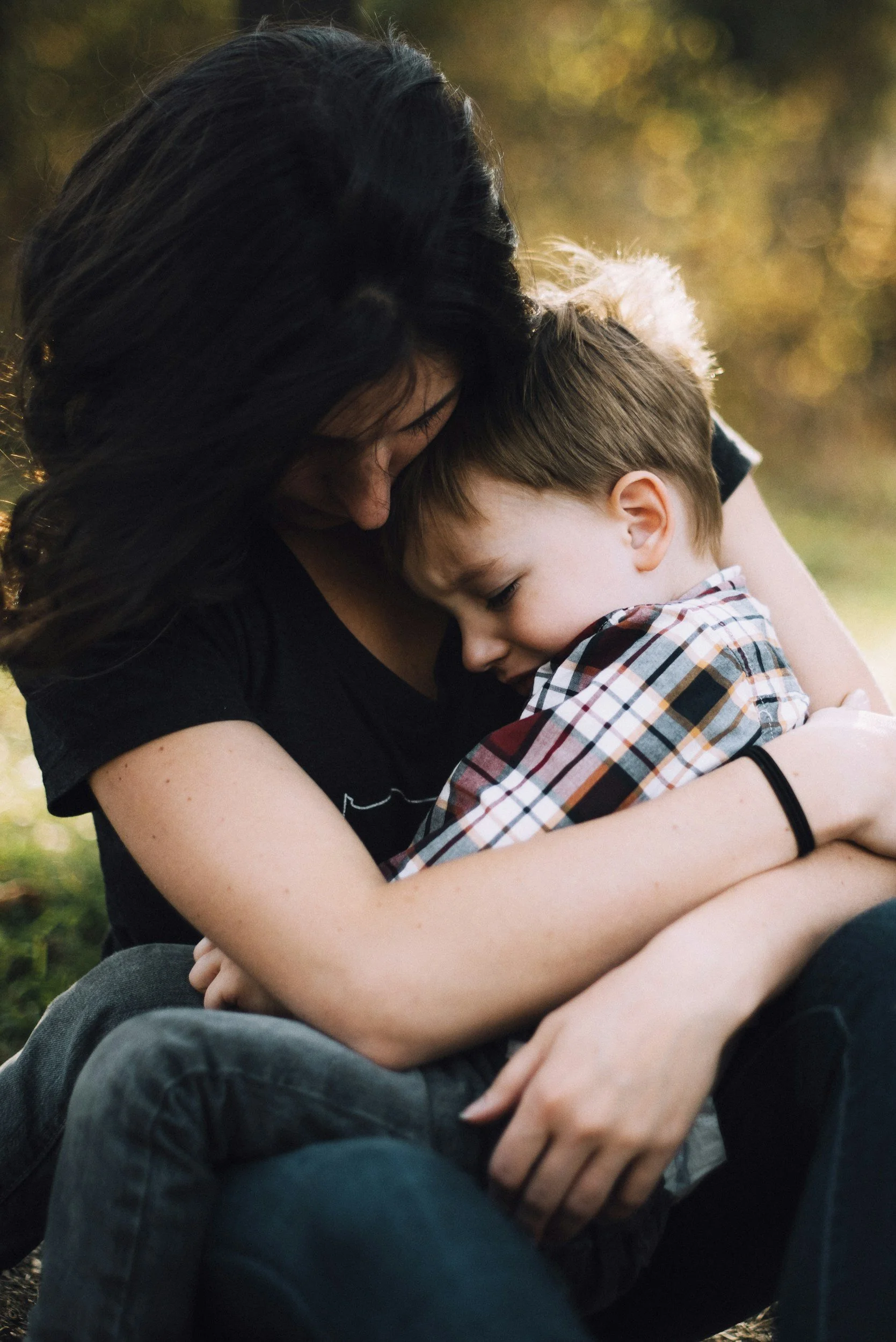
Children process grief differently than adults, and loss may appear through behavior, emotions, physical complaints, withdrawal, or changes in daily functioning. This week’s blog explores how children understand and process grief across development and how adults can support them through difficult experiences.
Children experience loss differently than adults, and their understanding of grief changes as they grow and develop. While adults often recognize grief through sadness or emotional expression, children may process loss in ways that are less direct and sometimes misunderstood. Changes in behavior, increased irritability, difficulty concentrating, regression, physical complaints, withdrawal, or even periods of playfulness shortly after a loss can all be part of how children process grief.
Research in child development and psychology continues to show that children do not process grief in a linear or consistent way. Younger children, in particular, may move in and out of grief quickly. A child may ask difficult questions one moment and then return to playing shortly after. This does not mean the loss did not affect them. Children often process overwhelming emotions in smaller, more manageable pieces over time.
A child’s developmental level also influences how they understand death and loss. Younger children may struggle to fully grasp permanence and may repeatedly ask questions about whether someone is coming back. School-aged children often begin to understand the permanence of death more clearly but may experience increased anxiety, fear, guilt, or confusion surrounding the loss. Adolescents may process grief in ways that appear more similar to adults, though they may still struggle to express emotions openly or seek support consistently.
Research also highlights the importance of emotionally responsive and supportive caregiving during periods of grief. Children benefit from honest, developmentally appropriate conversations, emotional validation, consistency, and opportunities to express feelings safely. In many cases, children are not looking for perfect answers. They are often looking for reassurance, connection, and the sense that their emotions are safe to experience and discuss.
Adults sometimes unintentionally overlook grief in children when emotions are not expressed outwardly. Some children become quieter. Others become more behavioral, emotional, or easily frustrated. Academic difficulties, changes in sleep, social withdrawal, or increased sensitivity can also emerge following significant loss or disruption.
Importantly, grief is not limited only to death. Children can also experience grief following divorce, relocation, family separation, loss of routines, friendship changes, illness, or other major life transitions. Any experience involving significant change, separation, or emotional disruption can impact a child’s sense of stability and security.
One of the most helpful things adults can provide during periods of grief is presence and emotional availability. Children often process difficult experiences through repeated conversations and interactions over time rather than through a single discussion. Feeling supported, listened to, and emotionally safe can help children gradually make sense of experiences that may initially feel confusing or overwhelming.
As Memorial Day approaches, many families may also experience grief connected to the loss of military service members, loved ones, friends, or family members who served. For children in military and veteran-connected families, these conversations and emotions may carry particular meaning. Remembering and honoring loved ones can create opportunities for connection, reflection, and support across generations.
Research consistently reminds us that children are deeply influenced not only by the experiences they go through, but also by how the adults around them help them navigate those experiences over time.
For more insights like this, follow along as we continue exploring child development, emotional well-being, and the power of everyday interactions.