
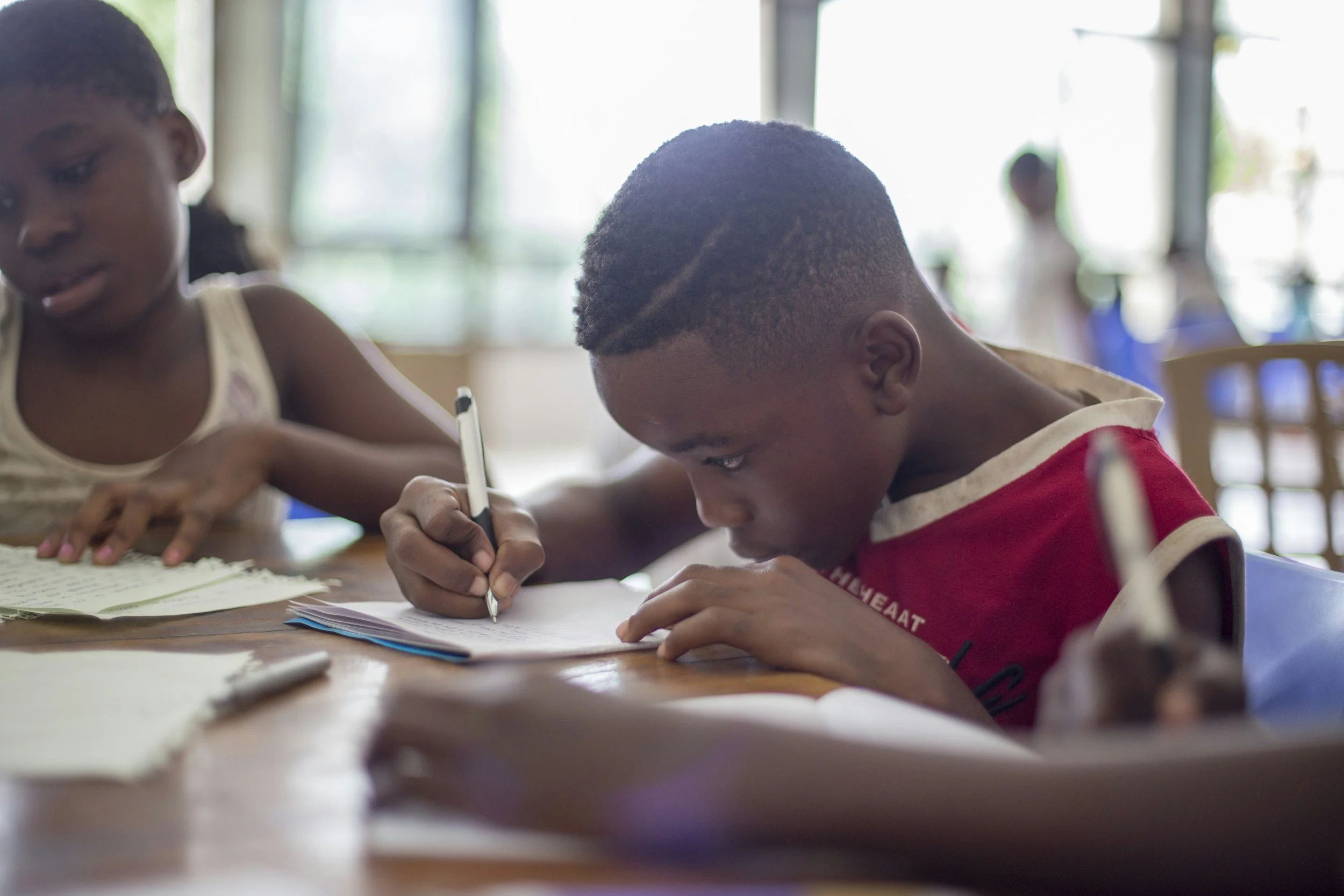
Writing by Hand vs. Typing: A School Psychologist's Perspective on Child Development
Technology has transformed how children write, but faster is not always better during development. From early literacy to organizing complex ideas, writing by hand engages skills that develop across childhood and adolescence. A school psychologist explores why pen and paper still deserve a place alongside keyboards, assistive technology, and AI.
As a school psychologist, I spend a lot of time evaluating children and adolescents who struggle with written expression. That work has changed the way I think about writing in general. Putting an idea on paper seems simple because most of us do it without thinking about everything happening behind the scenes. For a developing child, however, writing requires many different skills to work together at the same time.
Think about what happens when a child is asked to write a paragraph. They first have to understand what is being asked, come up with an idea, decide what they want to say, find the words to express it, and organize those thoughts in a way that makes sense. At the same time, they have to remember spelling, construct sentences, use punctuation, physically write the words, keep track of what they have already written, and hold onto what they want to say next. When those processes work together efficiently, we simply see the finished paragraph. When one or more of them is difficult, writing can quickly become frustrating.
I see this often during psychoeducational evaluations. A student may explain an idea beautifully in conversation but struggle to communicate the same idea on paper. Another student may have excellent handwriting and spelling but have difficulty organizing their thoughts. Some children know exactly what they want to say, but so much of their attention goes toward spelling, punctuation, or forming letters that they lose track of the original idea. For others, attention, working memory, language, processing speed, or executive functioning can make the process more difficult. The final piece of writing may look similar in each of these situations, but what is happening underneath can be very different.
Seeing those differences has reinforced something that applies to all children, not only those who struggle with writing. Written expression develops over time and is built from many smaller skills. That is particularly important to remember as technology continues to change how children learn and communicate.
Technology has unquestionably made writing easier and more accessible in many ways. Children can type assignments, dictate into devices, use spellcheck and predictive text, move entire paragraphs around in seconds, and increasingly use artificial intelligence to help brainstorm, organize, and edit their work. These tools can be incredibly useful. For some students with disabilities, assistive technology can also remove barriers and allow them to demonstrate knowledge that handwriting, spelling, or other difficulties might otherwise hide.
I am certainly not suggesting that children should trade their laptops for notebooks. They need to learn how to type, navigate digital environments, and use technology effectively. At the same time, I do not think we should be too quick to move away from pencil and paper simply because we have found faster ways to produce words. Writing by hand asks a developing child to coordinate what they see with fine-motor movements while connecting letters to sounds, words, language, and meaning. Research on handwriting development suggests that these experiences are connected with processes involved in early literacy development, including learning and recognizing letters.
We can see this development beginning long before children are writing paragraphs. When a young child scribbles on a piece of paper, traces shapes, practices writing their name, experiments with letters, or tries to spell a word that looks nothing like the conventional spelling, the finished product is only part of what matters. They are learning that the movements they make can create symbols, that those symbols represent sounds and words, and that those words can communicate meaning. The backwards letters, uneven spacing, and creative spelling are all part of that developmental process.
As children move through elementary school, many of those basic skills should gradually become easier and more automatic. They begin spending less mental energy thinking about how to form each letter or spell every familiar word. That frees up more of their attention for what they actually want to say. Instead of concentrating primarily on getting words onto the page, they can begin developing stronger sentences, organizing information, adding details, and thinking about whether their writing makes sense to someone else.
This is one reason two children who sound equally capable during a conversation can produce very different written work. One may be able to devote most of their attention to developing and organizing ideas, while the other is still using a significant amount of mental effort just getting those ideas onto the page. It is also why simply telling a child to "write more" does not always address what is making writing difficult.
By adolescence, writing takes on an even larger role. Middle and high school students are increasingly expected to use writing to explain, compare, analyze, persuade, synthesize information, and support their conclusions. At this stage, writing becomes more than a way to show what they know. It becomes one of the ways they learn to organize and develop their thinking.
Most adults have experienced this themselves. An idea can seem perfectly clear in our minds until we try to put it into words. Suddenly, we have to decide exactly what we mean, how one thought connects to another, whether we have enough information to support what we are saying, and whether someone else would understand it. The process of writing can expose gaps in our thinking and force us to work through them. In that sense, writing does not simply document thought. It can help shape and refine it.
This is another reason I believe writing by hand continues to deserve a place throughout development. Research comparing handwriting and typing has found differences in the motor, sensory, and brain activity involved in the two experiences. Some studies have found more complex patterns of brain connectivity during handwriting than during keyboard typing. Those findings are interesting, but I think it is important to be careful about what we conclude from them. They do not mean handwriting automatically makes a child smarter or that writing by hand is always better for learning. What they do reinforce is that handwriting and typing are not the same experience for the developing brain and body.
Fortunately, they do not need to compete. Children need both. There will be times when typing allows a student to write more efficiently, produce more complex work, or demonstrate knowledge without handwriting becoming an unnecessary barrier. There will also be times when pencil and paper provide valuable opportunities to practice the underlying skills involved in writing. The goal should not be choosing between technology and handwriting. It should be making thoughtful decisions about when each one best supports what we want a child to learn.
That balance becomes even more important as technology begins doing more of the writing process for us. Spellcheck can correct a word before a child has finished typing it. Predictive text can suggest what comes next. Speech-to-text can remove the physical demands of writing altogether. Artificial intelligence can help generate, organize, and revise ideas. These tools can be extremely helpful, but we should also be aware of what parts of the thinking process we are asking technology to do for a developing child.
Sometimes efficiency is exactly what we want. Other times, the process itself is where much of the learning occurs. There is value in remembering how a word is spelled, deciding how to organize a sentence, realizing that something does not communicate the intended meaning, and working through an idea until the words on the page actually reflect what the child is trying to say. That does not mean every assignment needs to be handwritten, nor does it mean withholding appropriate technology from a student who needs it. It simply means being intentional about the skill we are trying to develop and choosing the tool that best supports that goal.
My evaluation work has also taught me not to make assumptions when writing becomes consistently difficult. The finished product rarely tells the entire story. A comprehensive psychoeducational evaluation can help us better understand whether a student's difficulties involve written language, spelling, handwriting, attention, executive functioning, working memory, processing efficiency, language development, or another underlying area. Understanding what is contributing to the difficulty allows parents and educators to provide much more meaningful support than simply asking the child to work harder or write more.
We should not have to wait until a child struggles, however, to appreciate everything that goes into learning to write. Across childhood and adolescence, writing provides opportunities to bring together language, memory, movement, organization, and increasingly complex thinking. Technology will continue to change how children communicate, and preparing them for that future absolutely means teaching them how to use those tools effectively. It also means making sure they have opportunities to develop the abilities those tools are designed to support.
There is still something developmentally valuable about sitting with an idea, putting pencil to paper, realizing that the words do not quite capture what you meant, and trying again. The page is not simply a place for children to record their thoughts. It can also be a place where they learn how to develop, organize, and communicate them.

A New School Year, A Different Child? Understanding Behavior Changes as Children Adjust to School
The beginning of a new school year can bring noticeable changes in behavior as children adjust to new teachers, peers, routines, and expectations. From preschool through high school, those changes can look very different. In this week’s blog, I share what I look for as a licensed school psychologist working in a public PreK-12 setting, including what is typically part of adjustment and when persistent changes may deserve closer attention.
Every year, as students return to school, I begin seeing familiar patterns. A young child who was relatively independent during the summer suddenly becomes clingy at drop-off. An elementary student who rarely had emotional outbursts begins falling apart shortly after getting home. A middle school student becomes irritable, forgetful, or unusually exhausted. A teenager who seemed ready for the school year begins spending more time alone or responding to simple questions with frustration.
For families, these changes can be concerning, particularly when the child seemed to be doing well just a few weeks earlier. As a licensed school psychologist working full-time in a public PreK-12 setting, however, I have learned to view the beginning of the school year as a significant developmental transition. Children are not simply returning to a building. They are adapting to new relationships, expectations, schedules, academic demands, social dynamics, and routines, often simultaneously. That requires considerably more adjustment than we sometimes realize.
A new teacher alone represents an important change. Children have to learn how that adult communicates, what behaviors they expect, how much independence they require, how they respond to mistakes, and what the daily classroom routines will look like. Add a new group of classmates, different academic expectations, earlier mornings, extracurricular activities, homework, and navigating friendships, and even a child who generally enjoys school may temporarily look different while adapting.
In my work, I try not to evaluate these changes simply by asking whether a behavior is present. I am much more interested in its frequency, intensity, duration, context, and trajectory over time. That distinction is important because adjustment rarely looks like a straight line. A child can have several good days followed by a difficult one and still be moving in a healthy direction.
For our youngest children, particularly those entering preschool, kindergarten, or the early elementary years, the transition can be especially visible. They are still developing the ability to regulate emotions, communicate their needs, tolerate frustration, and navigate separation from caregivers. Their behavior may therefore communicate their adjustment before they have the language to explain it. Increased crying, clinginess, irritability, difficulty separating in the morning, fatigue, changes in sleep, or emotional outbursts after school can all emerge temporarily.
I often remind families that the child who holds it together throughout the school day and then becomes emotional at home is not necessarily demonstrating that something is seriously wrong. Young children expend considerable energy following directions, managing impulses, interacting with peers, transitioning between activities, and responding to unfamiliar expectations. Home may simply be the environment where they finally have enough security to release some of that accumulated stress.
As children move through elementary school, the picture begins to change. They generally have greater emotional and behavioral control, so I begin expecting more independence with routines and greater ability to communicate what is bothering them. At the same time, school becomes increasingly complex. Academic expectations increase, friendships become more important, and executive functioning demands begin to grow. A child may suddenly need to keep track of more materials, complete longer assignments, manage homework, remember multiple directions, and navigate a classroom that operates very differently from the one they left a few months earlier.
At this age, adjustment difficulties may look less like separation anxiety and more like irritability, avoidance, forgetfulness, complaints about school, increased frustration with homework, or emotional reactions that seem disproportionate to the immediate situation. Some children may begin saying that school is boring or that they simply do not like their teacher. I try not to dismiss those statements, but I also do not always take them literally. Sometimes the words children use are the best language they have for describing a demand they have not yet learned to identify.
By middle school, another layer is added. Students are navigating adolescence at the same time that their school environment often becomes substantially more complicated. Instead of adapting to one teacher and one classroom, they may be learning the expectations of six or seven teachers, changing classrooms throughout the day, managing assignments across multiple platforms, remembering materials, navigating a larger peer environment, and becoming increasingly responsible for their own organization.
This is also a developmental period when belonging becomes particularly important. A schedule change that separates a student from close friends may feel much more significant to a twelve-year-old than it appears to an adult. Increased irritability, emotional sensitivity, fatigue, procrastination, disorganization, or greater concern about peers can therefore accompany the beginning of the year. Some variability is expected. What I want to see is that the student gradually begins figuring out the system. They learn their teachers, find their classrooms, establish relationships, develop organizational strategies, and become increasingly comfortable with the rhythm of the school day.
High school students present another interesting challenge because their adjustment can be much less visible. We understandably expect teenagers to manage transitions with greater independence, and most can. However, greater independence also means adults may have fewer opportunities to see when things are becoming difficult.
A teenager may not cry at drop-off or tell us that they are nervous about fitting in. Instead, we may notice changes in sleep, increased withdrawal, irritability, declining motivation, procrastination, avoidance of activities they previously enjoyed, or a sudden drop in academic performance. At this age, I am particularly interested in changes from the student's own baseline. Adolescence naturally involves shifts in mood, independence, relationships, and sleep patterns, so not every change represents a concern. A noticeable and sustained departure from who that teenager typically is deserves more attention.T his is where time becomes an important part of the conversation.
Families often want to know exactly how long they should wait for a child to adjust. I understand why, but development rarely provides us with a precise deadline. For many students, the first several weeks of school represent a genuine adjustment period. By approximately the first month or so, I generally hope to see signs that the environment is becoming more familiar and that behaviors associated with the transition are beginning to improve. That does not mean every difficulty should disappear within four weeks. Some children settle within days, while others require considerably more time, particularly when they are also navigating anxiety, ADHD, autism, learning differences, significant family changes, or a particularly difficult transition. I find it more useful to look for direction rather than perfection.
Is the child who cried every morning now separating more easily on most days? Is the elementary student who came home overwhelmed beginning to recover more quickly? Is the middle school student remembering assignments more consistently? Is the teenager beginning to reconnect with friends and settle into a workable routine? Those changes matter. The behavior may still be present, but the trajectory suggests adaptation.
What gets my attention as a school psychologist is when that trajectory moves in the opposite direction. A behavior that becomes more frequent, more intense, lasts longer, begins appearing across multiple environments, or increasingly interferes with learning, relationships, sleep, family life, or everyday functioning deserves a closer look. I am also more concerned when a child begins persistently refusing school, withdrawing significantly from others, experiencing frequent physical complaints associated with school, showing substantial changes in eating or sleeping, losing previously established skills, demonstrating escalating aggression, or expressing persistent hopelessness or significant anxiety. In those situations, I would not recommend simply waiting for an arbitrary adjustment period to pass. Support can begin while we are still trying to understand what is happening.
One of the most valuable sources of information during this process is communication between home and school. Behavior does not always look the same across environments, and those differences can tell us something important. A child may appear regulated at school but struggle considerably at home. Another may function well in most classes but have difficulty during one particular period. Rather than viewing those differences as conflicting accounts, I view them as additional information about the conditions under which the child is functioning successfully and where the demands may be exceeding their current skills.
Working across the PreK-12 continuum has given me an appreciation for how differently adjustment looks depending on where a child is developmentally. I would not expect a kindergartener, a sixth grader, and a high school junior to communicate stress in the same way. Our expectations for independence, emotional regulation, organization, and communication should change as children mature. At every age, however, behavior provides information.
The student we meet during the first week of school is not necessarily the student we will see several weeks later. I have watched children who initially struggled with separation eventually walk confidently into their classrooms. I have seen students who appeared completely overwhelmed by a new schedule gradually develop routines and independence. Children are remarkably adaptable when given time, consistency, supportive relationships, and developmentally appropriate expectations. That is why I am cautious about drawing conclusions too quickly, but equally cautious about dismissing persistent concerns as simply part of starting school.
A new school year asks children to adapt academically, socially, emotionally, and behaviorally all at once. Some disruption during that process is expected. What I ultimately want to see is movement toward greater comfort, predictability, independence, and regulation. When that movement is happening, even gradually, it often tells us that a child is finding their footing. When it is not, the behavior may be telling us that it is time to become more curious about why.