
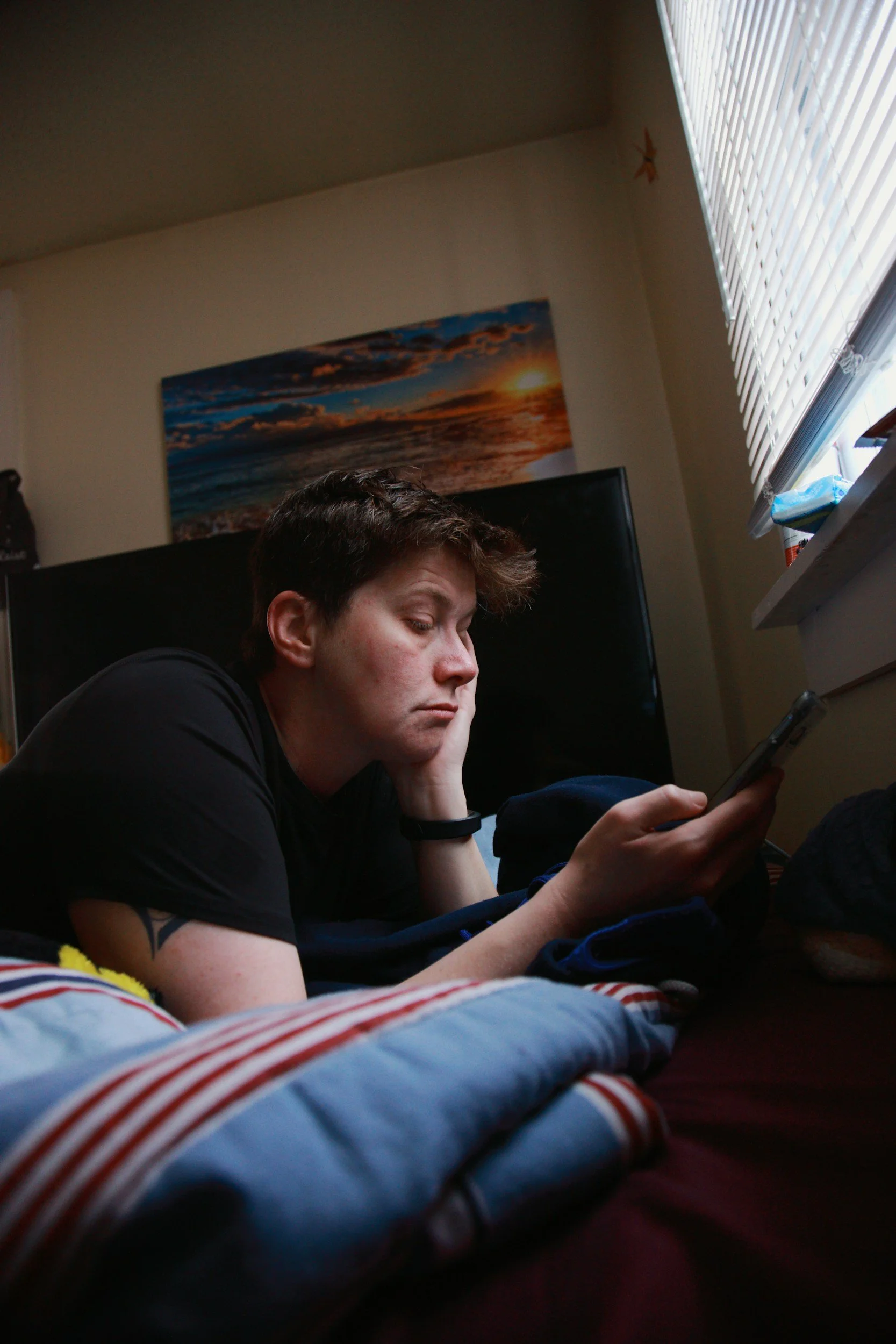
Before You Assume It’s a Motivation Problem, Read This
When a child avoids homework, procrastinates, or seems disengaged from school, motivation is often blamed. However, what appears to be a lack of effort may actually reflect challenges related to attention, executive functioning, anxiety, or learning. Understanding the difference can change how we support children and help them succeed.
Few concerns are raised more often by parents and teachers than a child’s apparent lack of motivation. A student forgets assignments, puts off homework until the last minute, avoids studying for tests, or seems uninterested in school, and the conclusion often feels straightforward. They simply are not trying hard enough. Over time, children may begin hearing messages about effort, responsibility, and motivation so frequently that they start questioning themselves as well.
The challenge is that what appears to be a lack of motivation on the surface is often something entirely different underneath. In my experience working with children, families, and schools, many of the students who appear disengaged from school are not lacking effort or potential. More often, they are struggling with obstacles that are not immediately visible to the adults around them.
Consider the student who repeatedly puts off starting assignments. From the outside, it may look like a choice. The work is sitting there waiting to be completed, yet nothing happens. What adults sometimes miss is that beginning a task requires a number of skills working together behind the scenes. A child must organize their materials, determine where to start, sustain attention, manage distractions, and hold information in mind long enough to follow through. For students with weaknesses in executive functioning, getting started can feel far more difficult than it appears.
Other children seem capable one moment and completely disengaged the next. Parents often tell me that their child can spend hours learning about a favorite hobby, mastering the rules of a game, or remembering every detail about a topic they enjoy, yet somehow cannot focus on a twenty-minute homework assignment. This inconsistency is often confusing because it seems to contradict the idea that motivation is the problem. In reality, attention is rarely an all-or-nothing skill. Many children with attention difficulties are able to focus exceptionally well when something captures their interest while struggling significantly when tasks are less engaging or require sustained mental effort.
Sometimes the issue is not attention at all. A child who avoids reading may be doing so because reading is genuinely difficult. Another child may struggle to express their thoughts in writing despite understanding the material. When academic tasks consistently feel harder than they appear to be for peers, frustration begins to accumulate. Over time, avoidance can become a way of protecting oneself from repeated experiences of difficulty or failure. What adults interpret as a lack of effort may actually be a response to discouragement.
Anxiety can create similar patterns. While many people associate anxiety with excessive worrying, it often shows up in ways that are less obvious. Some children become so concerned about making mistakes that they delay starting tasks altogether. Others become overwhelmed by the possibility of failure and disengage before they have a chance to be disappointed. From the outside, the behavior may look identical to a lack of motivation, but the emotional experience driving it is completely different.
Research in psychology and education consistently suggests that behavior is often the visible expression of something deeper. When we focus only on what we can see, we risk misunderstanding what is actually happening. Two children may display the exact same behavior while requiring entirely different types of support. One may be struggling with ADHD, another with anxiety, and another with an undiagnosed learning disability. The behavior is similar, but the reason behind it is not.
This is why one of the most powerful shifts parents can make is moving from judgment to curiosity. Rather than asking why a child is not trying, it can be more helpful to ask what might be making success difficult. That question encourages understanding rather than assumption. It opens the door to identifying barriers, developing skills, and providing support that is matched to the child’s actual needs.
None of this means that expectations should disappear. Children still benefit from accountability, structure, and responsibility. However, expectations are most effective when they are paired with understanding. When adults take the time to identify what is driving a child’s behavior, they are far more likely to address the root cause rather than simply reacting to the symptom.
The next time a child appears disengaged, avoids school-related tasks, or seems unwilling to participate, it may be worth considering that a lack of motivation is only one possible explanation, and often not the most accurate one. In many cases, what looks like a lack of effort is actually a signal that something beneath the surface deserves a closer look. Understanding that difference can change not only how we respond, but also the opportunities we create for children to succeed.

When Studying Isn’t the Problem: What Different Learners Actually Need
Some students can’t get started. Others can’t stop. When studying isn’t the problem, understanding how a child learns is what changes everything.
There’s a moment that happens for many parents that doesn’t quite make sense at first. You see your child sitting at the table, books open, time invested, effort clearly there, and yet the results don’t match. In other cases, you may see a child who refuses to step away from their work, who studies longer than necessary, rechecks everything, and still walks away unsure of themselves. At some point, the question shifts from whether they are studying to why it isn’t working, and that is usually where the real conversation begins.
For many students, the issue isn’t effort. It’s that the way they are studying doesn’t actually align with how they learn. Once you begin to see that, it changes how you interpret everything that follows.
Some students struggle to begin. They sit down with good intentions, but the task feels too big, too unclear, or too mentally demanding to enter. What looks like avoidance is often a very specific breakdown in how they plan, organize, or hold information in mind long enough to act on it. They are not refusing the work as much as they are unsure how to approach it. Without a clear entry point, the expectation to simply try harder adds pressure to something that already feels overwhelming.
Other students have the opposite experience. They do not struggle to start, but they have difficulty stepping away. They invest more time than necessary, overanalyze their work, and hold themselves to a standard that continues to shift just out of reach. From the outside, this can look like discipline and strong work ethic, but internally it is often driven by pressure and a need to feel certain that everything is correct before moving on. Studying, in this case, becomes less about learning and more about managing discomfort.
When you step back, a pattern begins to emerge. Both students are putting in effort. Both are engaged in their own way. Yet both are struggling. This is often the point where it becomes clear that effort alone is not the issue. What is really happening is a mismatch between how the student is approaching their work and how they actually process, manage, and respond to demands.
In one case, the difficulty lies in initiating and sustaining effort. In the other, it lies in regulating and containing it. These differences matter because they require completely different approaches. A student who cannot get started benefits from structure that reduces the mental load of beginning. Breaking tasks into smaller, clearly defined steps, providing visual supports, and creating consistent routines can make the work feel more accessible. The goal is not to increase pressure, but to create a system that allows them to enter the task with clarity.
A student who cannot stop, on the other hand, benefits from boundaries. Defining what is expected ahead of time, setting limits on how long to work, and establishing a clear endpoint can help shift the focus from perfection to progress. In these cases, learning to tolerate small imperfections is part of the process, not a failure of it.
What becomes important in both situations is the recognition that study habits are not one-size-fits-all. When strategies are not aligned with how a student learns, more time and more effort often lead to more frustration rather than better results. What appears on the surface as disorganization, lack of focus, or even overcommitment may be connected to underlying factors such as working memory, processing speed, attention, or anxiety.
When those underlying patterns are understood, the conversation changes. Instead of asking why something is not working, the focus shifts to what the student actually needs. That shift allows for more precise support, more effective strategies, and a clearer path forward.
When studying begins to align with how a student learns, it no longer feels like a constant uphill battle. It begins to feel manageable, and in many cases, meaningful.

When a Child Finally Understands How They Learn, Everything Can Change
When children understand how they learn, everything changes. Here’s how a psychoeducational evaluation can uncover strengths and unlock progress.
There is a moment that happens for some children that is hard to put into words, but powerful when you see it. It is the moment they realize, “I’m not the problem. I just learn differently.”
For many students, especially those who have been struggling, school can quietly shape how they see themselves. Repeated difficulty with reading, writing, attention, or keeping up with peers can lead to frustration, avoidance, or even shutting down. Over time, those experiences often turn into internal beliefs. “I’m not smart.” “I’m just bad at this.” “School isn’t for me.”
What is often missing is clarity. Not just about what a child is struggling with, but why.
Research in educational psychology has consistently shown that students who develop accurate self-awareness about their learning profiles tend to demonstrate greater motivation, persistence, and academic engagement. This is closely tied to the concept of self-efficacy, which refers to a student’s belief in their ability to succeed in specific tasks. When students understand their strengths and challenges, their confidence becomes grounded in reality rather than shaped by repeated failure.
There is also growing research around metacognition, or the ability to think about one’s own thinking. Students who are taught to understand how they learn are better able to plan, monitor, and adjust their approach to tasks. This has been linked to improved academic outcomes across multiple domains, particularly in reading comprehension and problem-solving.
The challenge is that many students are expected to develop this awareness on their own, without ever being given a clear explanation of how their brain works.
This is where a focused psychoeducational evaluation can be transformative.
A high-quality evaluation does more than produce scores or determine eligibility. When done well, it creates a detailed picture of how a child processes information, where they excel, and where they may need support. It connects patterns across cognitive functioning, academic skills, attention, and behavior in a way that makes sense to both parents and the child.
More importantly, it gives language to experiences that previously felt confusing. Instead of “I can’t focus,” a child begins to understand how attention works and what supports help. Instead of “I’m bad at reading,” they begin to see the specific skill breakdown and what can be done to improve it. Instead of avoiding work, they begin to approach it with strategies that actually fit how they learn. This shift matters.
Research on strengths-based approaches in education suggests that when students are taught to leverage their strengths while addressing their areas of need, they are more likely to stay engaged and less likely to internalize failure. It changes the narrative from limitation to strategy.
Parents often notice the difference quickly. A child who once resisted school may begin to show more willingness. A child who felt overwhelmed may begin to take small risks again. Not because the work suddenly became easy, but because it finally made sense.
Clarity leads to better support, both at home and in school. It allows for more targeted interventions, more effective accommodations, and more productive conversations with educators. It also helps ensure that expectations are aligned with the child’s actual learning profile, not assumptions.
If you are trying to understand how your child learns, or why certain challenges persist despite effort, taking a deeper look may be the next step.
You can learn more about the evaluation process by clicking here:
When a child understands themselves, it changes how they approach learning. And in many cases, that is where real progress begins.
Want more insights like this? Subscribe for weekly content designed to help you better understand how children learn and how to support them effectively.

The Value of a Private Evaluation from a School-Based Professional
Not all evaluations are created equal. Here is why working with a professional who understands both private assessment and the school system makes a difference.
Parents often begin searching for a private evaluation when they feel something is not fully adding up. Their child may be struggling, but the reason is unclear. Or they may already have information, but it does not seem to translate into meaningful support. In many cases, the issue is not a lack of effort. It is a lack of clarity.
A high-quality evaluation should do more than produce scores and labels. It should help you understand your child in a way that is practical, actionable, and relevant to the environments they move through every day. This is where the background of the evaluator matters more than most parents realize.
Working with a professional who actively works within the school system provides a level of insight that goes beyond testing. It brings an understanding of how decisions are actually made in schools, what teams are looking for, and how data is interpreted in real-world settings. This perspective helps bridge a gap that many families experience, where they have a report in hand but still feel unsure about what to do next.
In schools, eligibility decisions are not based on a single score or isolated concern. They are based on patterns, impact, and how a student is functioning within the educational environment. A professional who understands this process can design an evaluation that aligns with how schools think, while still maintaining a comprehensive and individualized approach. This increases the likelihood that the results are not only accurate, but also usable.
Many private evaluations provide valuable information, but not all of them translate well into the school setting. Parents sometimes leave with a detailed report that sounds helpful but does not clearly connect to classroom performance or educational planning. This can lead to frustration when teams struggle to apply the findings in a meaningful way.
When an evaluation is grounded in both clinical expertise and school-based experience, the recommendations tend to be more targeted and realistic. They reflect what can actually be implemented in a classroom, what supports are reasonable, and how to advocate effectively without creating unnecessary conflict. If you are looking for clarity that extends beyond testing and into real-world application, you can learn more about what that process looks like here.
Another advantage is the ability to anticipate how information will be received. School teams operate within specific guidelines, timelines, and frameworks. A professional who understands those systems can present findings in a way that aligns with those expectations, which often leads to more productive conversations and clearer next steps for your child.
This does not mean that private evaluations replace what schools do. It means they can complement and strengthen the process. A well-done private evaluation can provide a more detailed understanding of your child’s learning profile, highlight patterns that may not be immediately visible in the classroom, and offer a roadmap for support that both parents and educators can follow.
For some families, the value is also in the timeline. School-based evaluations are often tied to specific processes and can take time to initiate and complete. A private evaluation allows families to move forward more quickly when they are concerned and want answers sooner rather than later. That clarity can reduce uncertainty and help guide decisions with greater confidence.
At the same time, the goal is not speed alone. The goal is accuracy, depth, and usefulness. An evaluation should help you answer questions like what is really going on, what does this mean for my child, and what should we do next. If those questions are not clearly answered, the evaluation has not fully done its job.
There is also a relational component that often gets overlooked. When families feel heard, understood, and guided through the process, they are more likely to feel confident advocating for their child. A professional who understands both the emotional and procedural aspects of this process can help families move forward with clarity rather than confusion.
If you are considering a private evaluation, it is worth asking not only what will be assessed, but who is doing the assessment and how their experience informs the process. That distinction can significantly impact the quality of the information you receive and how effectively it can be used to support your child.
If you are looking for a comprehensive, strengths-based evaluation that is designed to translate directly into meaningful support at home and in school, you can explore what that process looks like and whether it is the right fit for your family here.
Clarity changes how decisions are made. And when decisions are clearer, outcomes tend to follow.

When Effort Doesn’t Match Results: Could a Learning Difference Be Present?
When a child works hard but continues to struggle academically, an underlying learning difference may be present. Learn the signs and next steps.
It can be confusing and frustrating to watch your child work hard yet continue to struggle in school. When effort is strong but results remain inconsistent, it may point to an underlying learning difference rather than a lack of motivation or discipline. Over time, ongoing academic difficulty can begin to affect a child’s confidence and overall experience in the classroom.
Learning differences such as dyslexia, dysgraphia, or dyscalculia can impact reading fluency, written expression, spelling, math reasoning, or calculation. These challenges are not always obvious, especially in children who are bright, curious, and eager to succeed. Many students develop ways to compensate for their difficulties, which can mask the root issue for years. As academic demands increase, however, the gap between their potential and performance may become more noticeable.
When a learning difference goes unidentified, the effects can extend beyond grades. Children may begin to doubt themselves, avoid certain subjects, or feel anxious about school. Some may appear inattentive or frustrated when, in reality, they are overwhelmed. Over time, persistent academic struggles can influence course placement, access to advanced opportunities, and even how a child views their own abilities.
A comprehensive learning disability evaluation looks closely at how your child thinks, learns, and processes information. It helps determine whether a specific learning difference is present and provides clear direction for support. With the right understanding and targeted strategies, students can build skills, strengthen confidence, and move forward with greater clarity. Families throughout Palm Beach County and the Treasure Coast often seek private evaluations when they sense their child is capable of more but cannot yet explain why progress feels uneven.
Free Parent Guide for Parents
If your child seems. to be working very hard in school but still struggling to make progress, it may help to better understand how they learn.
Download the free guide: 5 Signs Your Child May Benefit From a Learning Evalutation